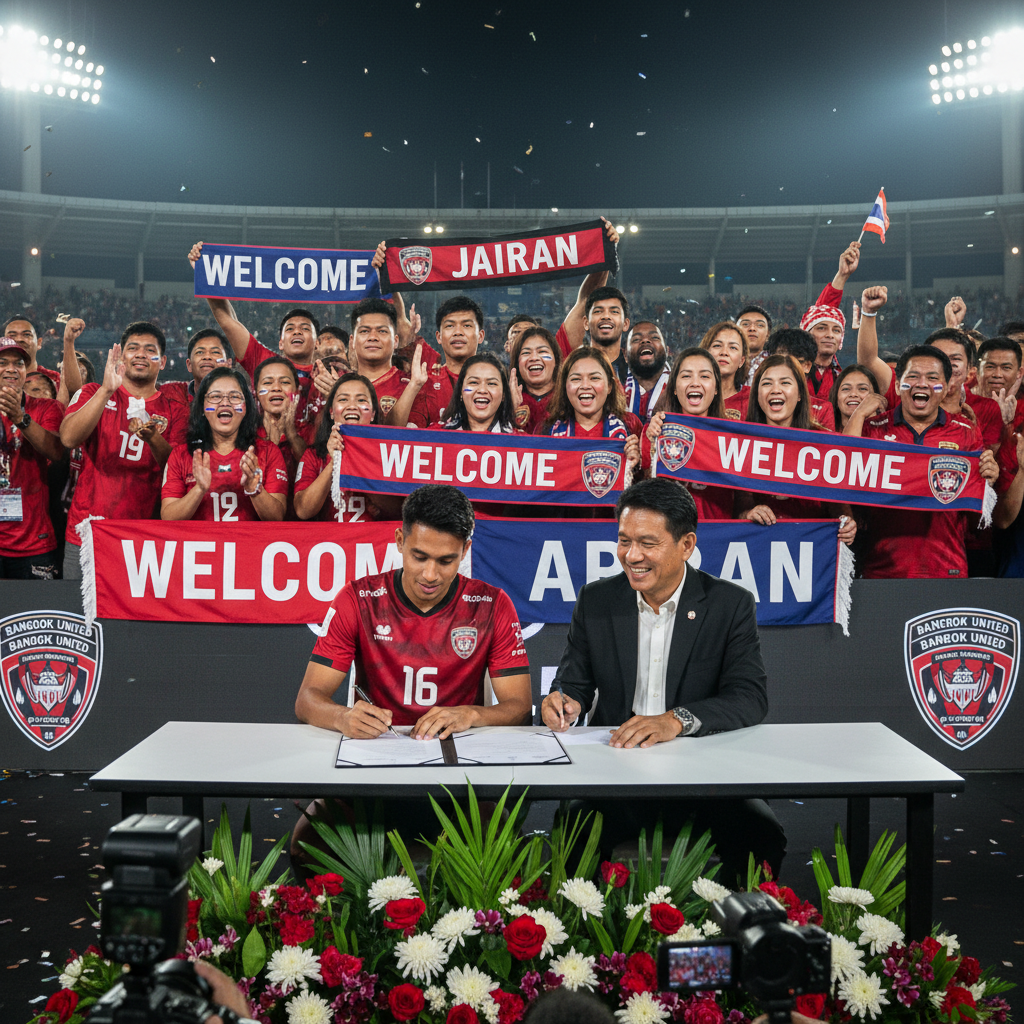
When a Transfer Turns Tactics: Bangkok United’s New Era
Estimated reading time: 5 minutes
Key Takeaways
- Pratama Arhan’s arrival reshaped Bangkok United’s attacking rhythm.
- The team shifted from high‑pressing to a patient build‑up, altering midfield and defensive duties.
- Strategic flexibility became a core value, allowing the squad to adapt mid‑game.
- Over‑reliance on a single player poses a risk; diversification is essential.
- A psychological edge emerged, boosting confidence for future fixtures.
Table of Contents
Opening
It wasn’t the final whistle that left fans talking. It was the moment the new signing—Pratama Arhan—walked onto the pitch, a quiet confidence that seemed to ripple through the entire squad. For Bangkok United, the arrival of a seasoned striker from the Eredivisie was supposed to be a simple boost in firepower, but the reality on the field revealed something far deeper. The first minute of the match against Muangthong United already hinted at a tactical shift that would define the season. The new forward’s presence forced the coach to rethink the entire attacking rhythm, and the ripple effect could be felt from the backline to the midfield. It was in that moment that the link between a single transfer and a team’s identity became unmistakably clear, and the conversation that followed was less about the goal tally and more about the evolving narrative of Bangkok United. catur777 may be a name that pops up in online forums, but the story on the pitch was far more compelling.
A New Game Plan Unfolds
From the kickoff, Bangkok United’s tempo was noticeably altered. The coach had long favored a high‑pressing style that relied on quick transitions, but the presence of Arhan demanded a more patient build‑up. The midfielders began to drop deeper, creating a two‑line passing structure that allowed Arhan to drift between the lines and exploit the space behind Muangthong’s defensive line. This shift was not a mere tactical experiment; it was a strategic response to the new player’s strengths—his ability to hold the ball, create opportunities, and finish with precision.
When the first half ended, the scoreline was still 0‑0, but the narrative was already changing. The defenders of Muangthong found themselves confronting a striker who could stay on the ball and pick a pass out of tight situations. The midfield, once a rapid conveyor belt, had become a more measured conduit. This subtle re‑engineering of the attack had a domino effect: the defenders had to adjust their positioning, the midfielders had to alter their passing angles, and the forwards had to adapt to a slower, more calculated rhythm.
The decision to slow down the game was not a sign of weakness. On the contrary, it was a calculated move to exploit the opponent’s defensive gaps. By allowing Arhan to control the tempo, Bangkok United could dictate the pace, forcing Muangthong to chase the ball and, in doing so, create space behind their own lines. The result? A series of well‑timed runs from the wings that culminated in a cross into the box, where Arhan’s aerial prowess made the difference.
Subheading: The Tactical Ripple Effect
catur777 may be a popular discussion point among fans, but the tactical ripple effect of Arhan’s arrival is what truly mattered. The shift in Bangkok United’s attacking philosophy forced the team to rethink their defensive responsibilities as well. With a more patient build‑up, the full‑backs were required to provide width, but also to track back more aggressively. This dual responsibility created a dynamic where the defense could absorb pressure while still contributing to the attack, a balance that had been difficult to achieve in previous seasons.
During the second half, the coach’s adjustments became even more evident. He swapped the starting striker for a more dynamic winger, allowing Arhan to operate in a deeper role. This change opened up the midfield, giving the playmaker a clearer vision and more space to operate. The result was a series of intricate passes that broke Muangthong’s defensive shape, culminating in a spectacular goal that sealed the win. The goal itself was not merely a testament to individual skill; it was the culmination of a strategic plan that had evolved over the course of the match.
What This Means for the Future
Adaptability as a Core Value
Bangkok United’s willingness to alter their tactical approach mid‑game demonstrates a level of adaptability that could become a hallmark of their season. Opponents will need to prepare for a team that can shift between high‑press and patient build‑up with equal ease.
Role of the New Signing
Arhan’s integration shows that a single player can influence the entire team’s dynamic. His ability to hold the ball and create space has already become a key weapon in the squad’s arsenal.
Defensive Solidity
The defensive adjustments made to accommodate the new attacking strategy have reinforced the team’s resilience. The full‑backs’ increased work rate and the midfield’s ability to track back will be vital in high‑pressure matches.
Risk of Over‑Reliance
While the new approach has been successful, there is a risk of over‑reliance on a single player’s attributes. The coaching staff will need to diversify the attacking options to keep opponents guessing.
Psychological Edge
The confidence displayed by the team after the transfer signals a psychological advantage. The belief that the squad can adapt and succeed may carry forward into tougher fixtures.
Closing Reflections
The match against Muangthong United was not just a win on the scoreboard; it was a statement about Bangkok United’s evolving identity. The arrival of Pratama Arhan forced the team to rethink its core tactics, revealing a willingness to adapt that could be the difference between mediocrity and championship contention. The story is a reminder that football is as much about strategy as it is about skill. Every decision, from the way the midfield drops deep to the way the full‑backs track back, carries a ripple that can shape the outcome of a game.
For fans, the takeaway is simple: pay attention to the subtle shifts in tempo and positioning. Those are the moments that often dictate the narrative of a match. And for those who want to delve deeper into how a single transfer can redefine an entire team’s play, the conversation continues beyond the pitch—into forums, podcasts, and, of course, the ever‑present catur777.
FAQ
What impact did Pratama Arhan have on Bangkok United’s playing style?
Arhan’s presence prompted a shift from a high‑pressing, rapid transition approach to a more patient, patient build‑up system. This allowed the team to control tempo and exploit spaces behind the opposition’s defense.
How did the coach adjust the squad to accommodate Arhan?
Midfielders dropped deeper, full‑backs provided width and tracked back aggressively, and a dynamic winger replaced the starting striker in the second half to free up space for Arhan.
Is there a risk of over‑reliance on Arhan?
Yes. While his attributes are a key weapon, the coaching staff must diversify attacking options to keep opponents uncertain.
What psychological benefits did the team gain from Arhan’s arrival?
The squad’s confidence grew, showcasing their adaptability and giving them a psychological edge for upcoming fixtures.
How can fans observe the tactical shifts during matches?
Watch for changes in midfield depth, full‑back positioning, and the team’s tempo—these subtle shifts often dictate match outcomes.